INDICATIONS

PAVBLU® (aflibercept-ayyh) is indicated for the treatment of Neovascular (Wet) Age-Related Macular Degeneration (AMD), Macular
Edema following Retinal Vein Occlusion (RVO), Diabetic Macular Edema (DME), and Diabetic Retinopathy (DR).

PAVBLU® is not indicated for Retinopathy of Prematurity, for which Regeneron has marketing exclusivity.

PAVBLU® (aflibercept-ayyh) is indicated for the treatment of Neovascular (Wet) Age-Related Macular Degeneration...Read more

PAVBLU® (aflibercept-ayyh) is indicated for the treatment of Neovascular (Wet) Age-Related Macular Degeneration (AMD), Macular
Edema following Retinal Vein Occlusion (RVO), Diabetic Macular Edema (DME), and Diabetic Retinopathy (DR)...Read more

PAVBLU® is available in both single-dose vial and prefilled syringe that is silicone oil-free

PAVBLU® offers the same dosing schedule
as EYLEA® 2 mg across indications1,2

Indication Recommended Dosing Schedule PAVBLU® EYLEA®
Neovascular (wet) age‑related macular degeneration (AMD)*

Every 4 weeks for
first 3 months

Every 8 weeks
thereafter

chart showing PAVBLU® dosing schedule for the first 3 months | chart showing PAVBLU® dosing schedule for every 8 weeks thereafter
chart showing PAVBLU® dosing schedule for the first 3 months

Every 4 weeks for
first 3 months

(~ 28 days, monthly)

chart showing PAVBLU® dosing schedule for every 8 weeks thereafter

Every 8 weeks
thereafter

(2 months)

Diabetic macular edema (DME) and diabetic retinopathy (DR)

Every 4 weeks for
first 5 injections

Every 8 weeks
thereafter

chart showing PAVBLU® dosing schedule for the first 5 injections | chart showing PAVBLU® dosing schedule for every 8 weeks thereafter
chart showing PAVBLU® dosing schedule for the first 5 injections

Every 4 weeks for
first 5 injections

(~ 28 days, monthly)

chart showing PAVBLU® dosing schedule for every 8 weeks thereafter

Every 8 weeks
thereafter

(2 months)

Macular edema following retinal vein occlusion (RVO)

Every 4 weeks

chart showing PAVBLU® dosing schedule for every 4 weeks | chart showing PAVBLU® dosing schedule
chart showing PAVBLU® dosing schedule for every 4 weeks

Every 4 weeks

chart showing PAVBLU® dosing schedule

(~ 25 days, monthly)

*For wet AMD: although PAVBLU® may be injected as frequently as 2 mg every 4 weeks (approximately every 25 days, monthly), additional efficacy was not demonstrated in most patients with Q4W dosing compared with Q8W dosing. After 1 year of effective therapy, patients may also be treated with 1 injection every 12 weeks, although this regimen is not as effective as the recommended Q8W dosing regimen. Patients should be assessed regularly.1

For DME and DR: although PAVBLU® may be injected as frequently as 2 mg every 4 weeks (approximately every 25 days, monthly), additional efficacy was not demonstrated in most patients with Q4W dosing compared with Q8W dosing.1

PAVBLU® is not indicated for Retinopathy of Prematurity, for which Regeneron has marketing exclusivity.

Q4W = every 4 weeks; Q8W = every 8 weeks.

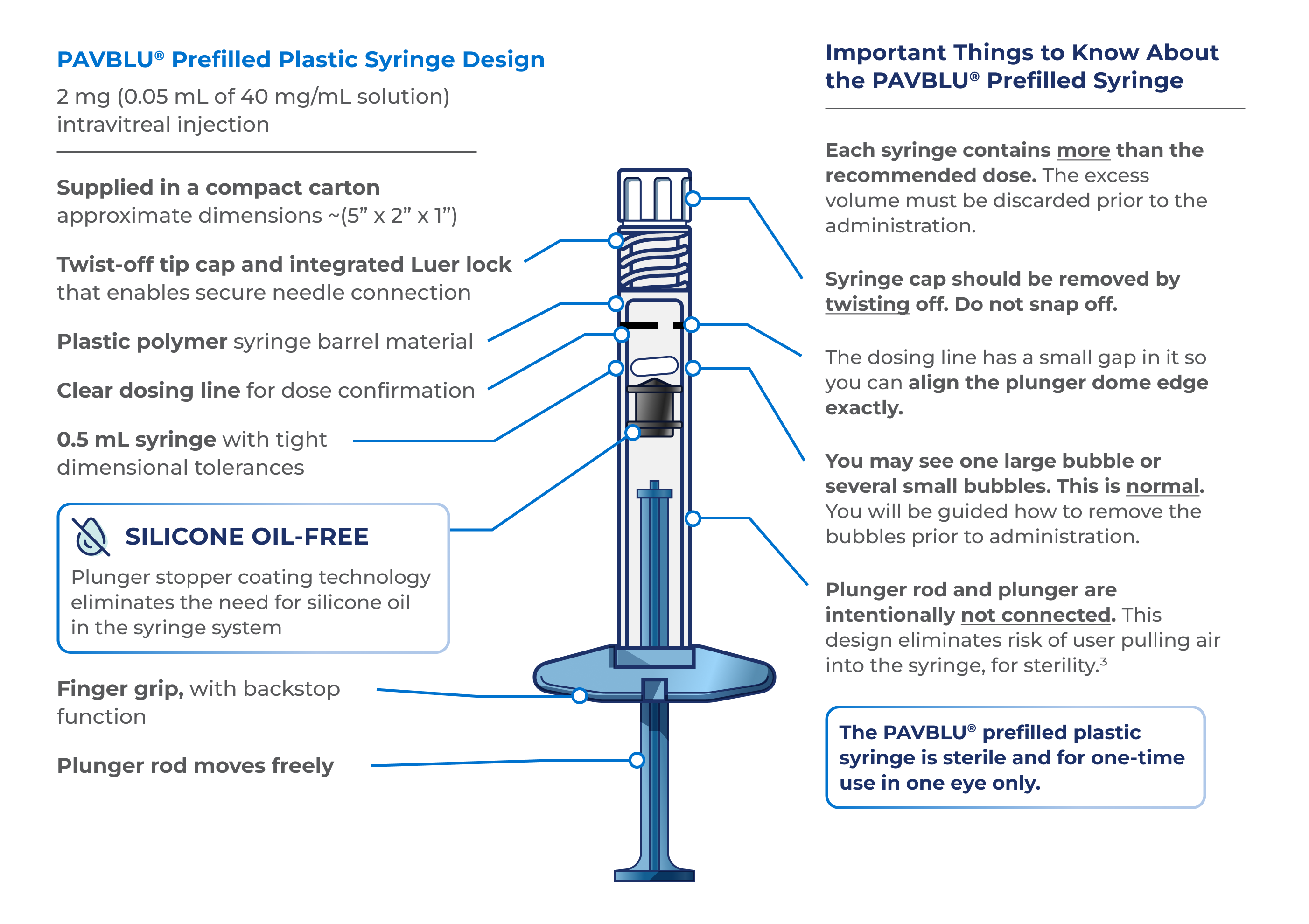
PAVBLU® offers a prefilled plastic syringe (PFS) that is specially designed for ophthalmic indications and is silicone oil-free1,2

PAVBLU® Prefilled Plastic Syringe Design

Please see preparation instructions for the PAVBLU® PFS in the full Prescribing Information.

arrow
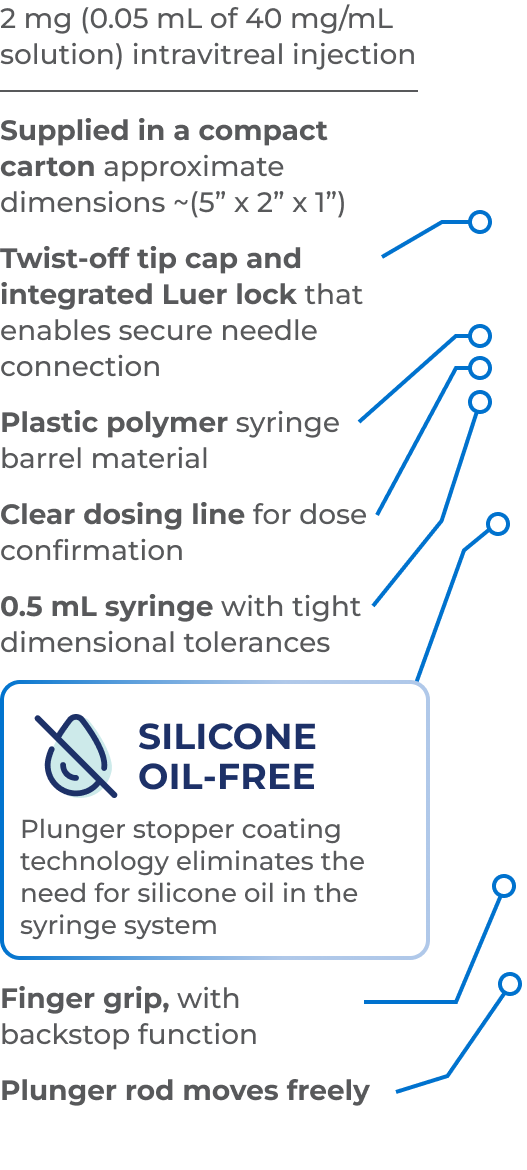
PAVBLU® Prefilled Plastic Syringe Design Elements
PAVBLU® Prefilled Syringe

Please see preparation instructions for the PAVBLU® PFS in the full Prescribing Information.

arrow
PAVBLU® Prefilled Syringe
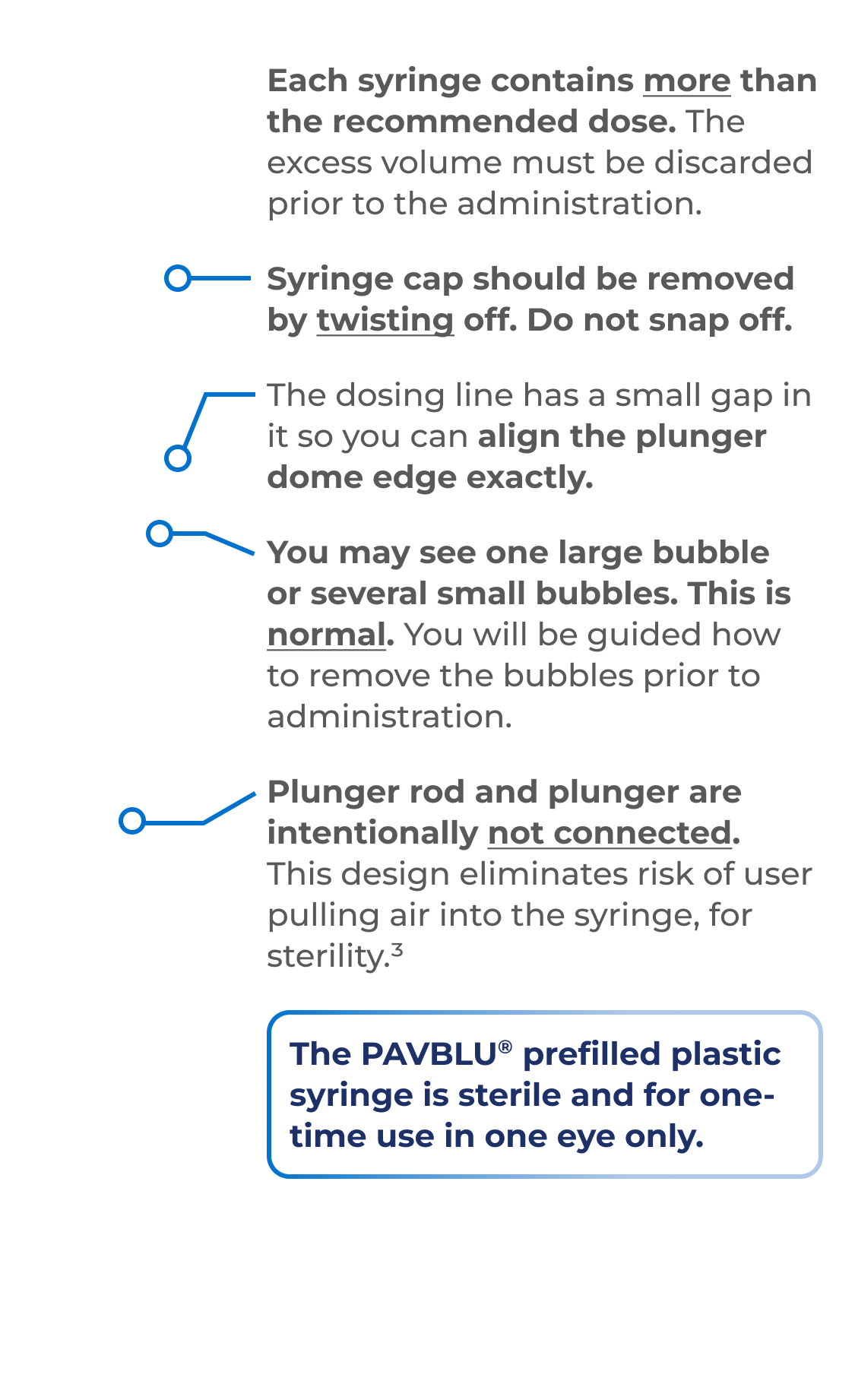
Important Things to Know About the PAVBLU® Prefilled Syringe

Please see preparation instructions for the PAVBLU® PFS in the full Prescribing Information.

Over 100,000 patients served
with the PAVBLU® prefilled syringe4

PAVBLU® prefilled syringe preparation

Follow these instructions to prepare the syringe prior to the administration.

Each syringe contains more than the recommended dose.

Please consult the Prescribing Information before administration.

1. Remove syringe from tray & inspect

  • Grasp the prefilled syringe by the syringe barrel. DO NOT remove the prefilled syringe from the tray by the plunger rod.
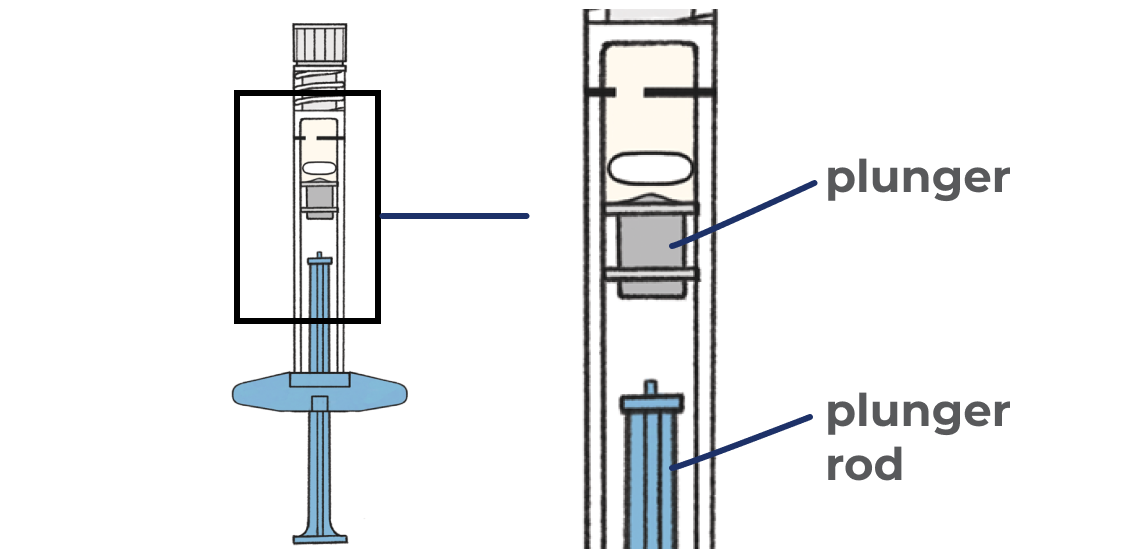
  • Plunger rod and plunger are intentionally not connected. This design stops air from pulling into the syringe to help maintain sterility.
  • Medicine should be clear to slightly yellow. DO NOT use the prefilled syringe if the product is discolored or if particles are observed.
diagram-1

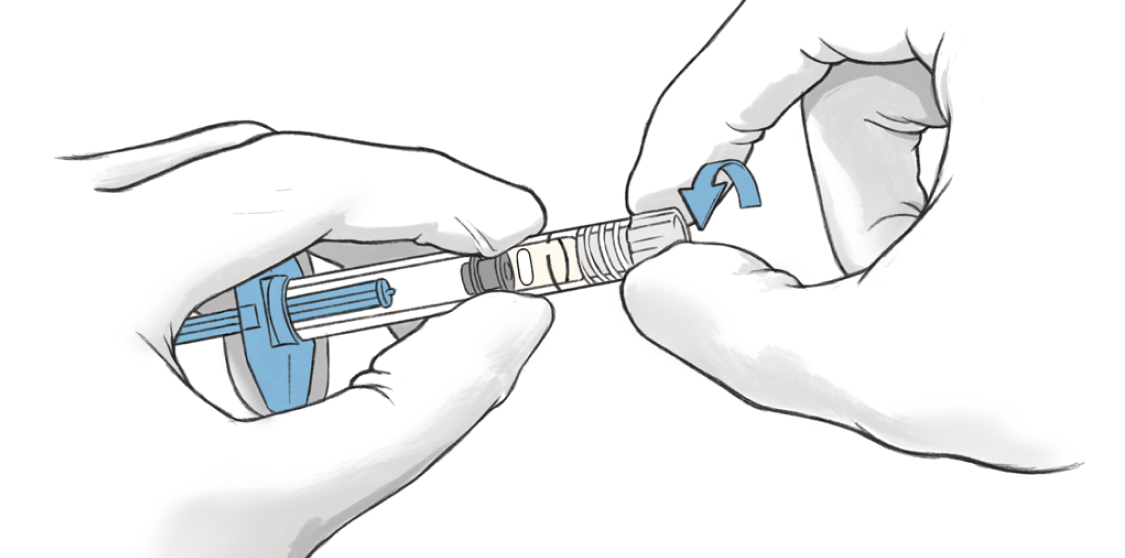
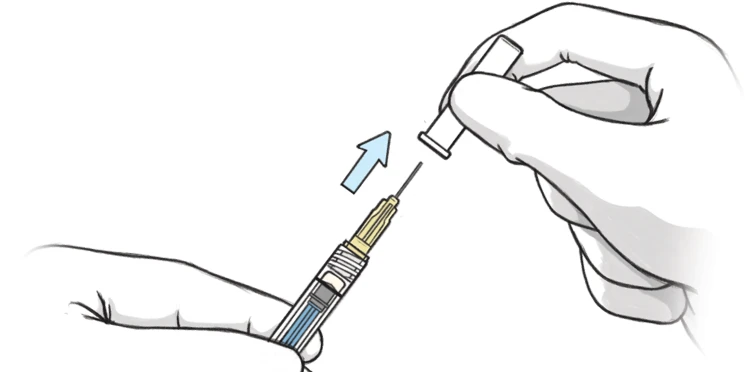
2. Twist off syringe cap

  • DO NOT snap or break off the syringe cap.
  • TWIST OFF the syringe cap by holding the syringe in one hand and the syringe cap with the thumb and forefinger of the other hand.
diagram-2

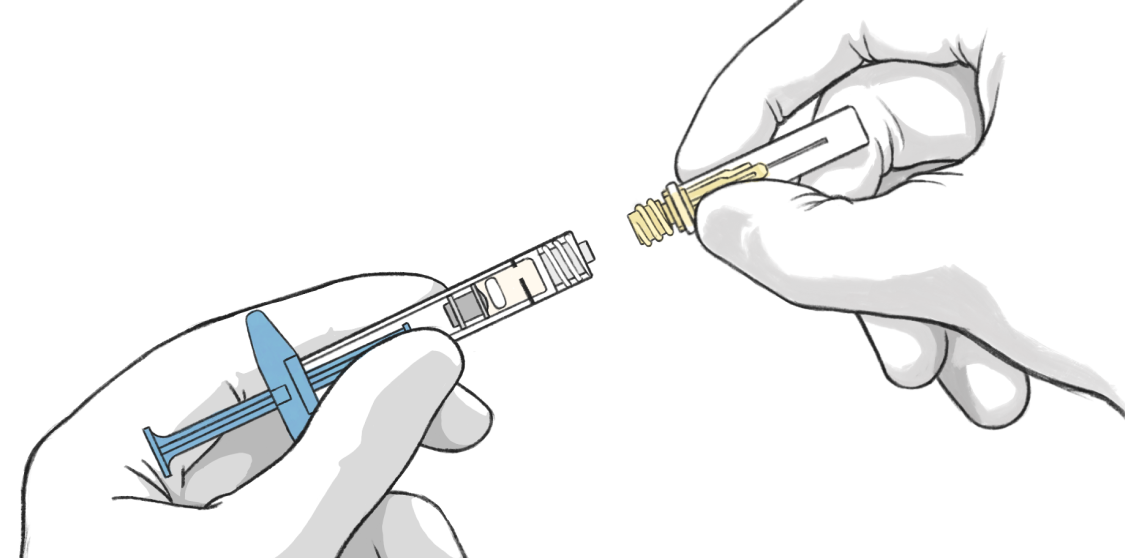
3. Attach needle

  • Using aseptic technique, firmly twist a 30-gauge x 1/2 inch injection needle onto the Luer lock syringe tip.
  • To maintain sterility, leave the needle shield on the needle for the remainder of the preparation steps.
diagram-3

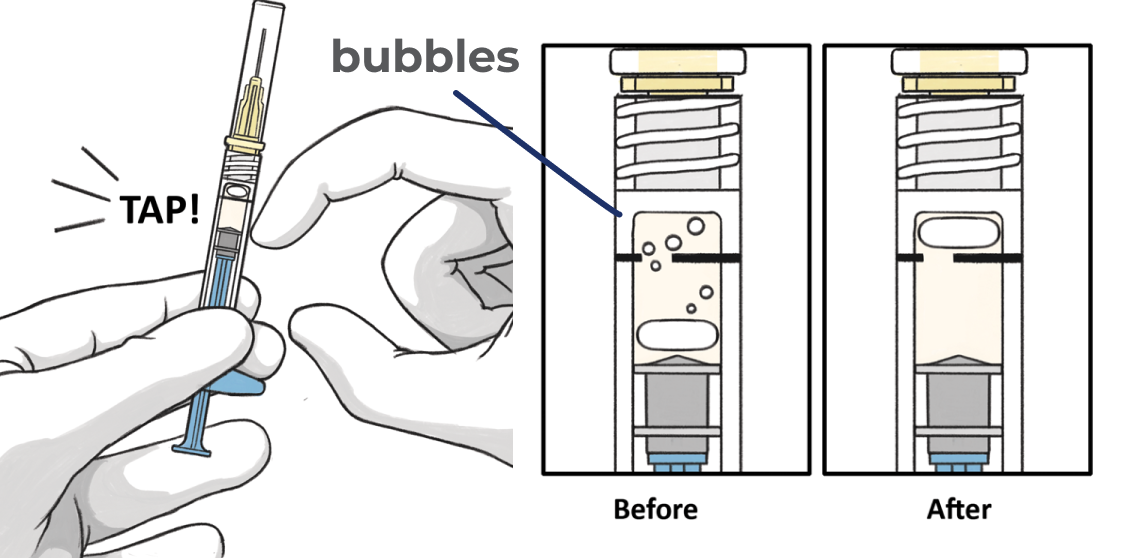
4. Dislodge air bubbles

  • You may see one large bubble or several small bubbles. This is normal.
  • Gently tap the syringe with your finger until the bubbles rise to the top.
  • Visually inspect ALL sides of the syringe for bubbles.
diagram-4

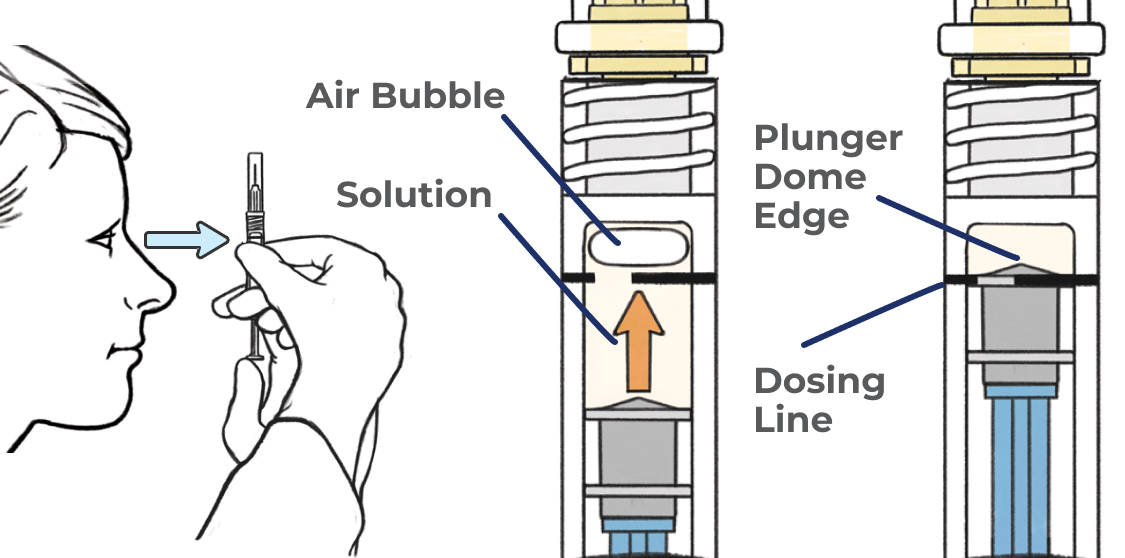
5. GENTLY expel air and set dose

  • Hold the syringe straight up and down so that the black dosing line is eye level.
  • Slowly move the plunger rod until it contacts the plunger. (Note: plunger rod moves freely).
  • Gently depress the plunger rod until the plunger dome edge aligns with the black dosing line. This eliminates all bubbles and expels excess drug.

Note: There is a slight gap in the black dosing line so you can match the plunger dome edge exactly.

diagram-5

6. Preparation is now complete

  • Syringe is now ready for injection.
  • Remove needle cap only when ready to inject.
  • The PAVBLU® prefilled plastic syringe is sterile and for one-time
    use in one eye only.
diagram-6
Download the full handling and administration guide

Important Safety Information

CONTRAINDICATIONS
  • PAVBLU® is contraindicated in patients with ocular or periocular infections, active intraocular inflammation, or known
    hypersensitivity to aflibercept or to any of the excipients in PAVBLU.
WARNINGS AND PRECAUTIONS
  • Intravitreal injections, including those with aflibercept products, have been associated with endophthalmitis and retinal
    detachments and, more rarely, retinal vasculitis with or without occlusion. Proper aseptic injection technique must always be
    used when administering PAVBLU. Patients and/or caregivers should be instructed to report any signs and/or symptoms
    suggestive of endophthalmitis, retinal detachment, or retinal vasculitis without delay and should be managed appropriately.
  • Acute increases in intraocular pressure have been seen within 60 minutes of intravitreal injection, including with aflibercept
    products. Sustained increases in intraocular pressure have also been reported after repeated intravitreal dosing with VEGF
    inhibitors. Intraocular pressure and the perfusion of the optic nerve head should be monitored and managed appropriately.
  • There is a potential risk of arterial thromboembolic events (ATEs) following intravitreal use of VEGF inhibitors, including
    aflibercept products. ATEs are defined as nonfatal stroke, nonfatal myocardial infarction, or vascular death (including deaths of
    unknown cause).
  • The incidence of reported thromboembolic events in wet AMD studies during the first year was 1.8% (32 out of 1824) in the
    combined group of patients treated with aflibercept compared with 1.5% (9 out of 595) in patients treated with ranibizumab;
    through 96 weeks, the incidence was 3.3% (60 out of 1824) in the aflibercept group compared with 3.2% (19 out of 595) in the
    ranibizumab group. The incidence in the DME studies from baseline to week 52 was 3.3% (19 out of 578) in the combined group
    of patients treated with aflibercept compared with 2.8% (8 out of 287) in the control group; from baseline to week 100, the
    incidence was 6.4% (37 out of 578) in the combined group of patients treated with aflibercept compared with 4.2% (12 out of
    287) in the control group. There were no reported thromboembolic events in the patients treated with aflibercept in the first six
    months of the RVO studies.
ADVERSE REACTIONS
  • Serious adverse reactions related to the injection procedure have occurred in <0.1% of intravitreal injections with aflibercept
    including endophthalmitis and retinal detachment.
  • The most common adverse reactions (≥5%) reported in patients receiving aflibercept were conjunctival hemorrhage, eye pain,
    cataract, vitreous detachment, vitreous floaters, and intraocular pressure increased.
  • Patients may experience temporary visual disturbances after an intravitreal injection with PAVBLU and the associated eye
    examinations. Advise patients not to drive or use machinery until visual function has recovered sufficiently.
Please see full Prescribing Information for PAVBLU.

You are encouraged to report negative side effects of prescription drugs to the FDA.

Visit www.fda.gov/medwatch, or call 1-800-FDA-1088.

INDICATIONS

PAVBLU® (aflibercept-ayyh) is indicated for the treatment of Neovascular (Wet) Age-Related Macular Degeneration (AMD),
Macular Edema following Retinal Vein Occlusion (RVO), Diabetic Macular Edema (DME), and Diabetic Retinopathy (DR).

PAVBLU® is not indicated for Retinopathy of Prematurity, for which Regeneron has marketing exclusivity.

Important Safety Information

CONTRAINDICATIONS
  • PAVBLU® is contraindicated in patients with ocular or periocular infections, active intraocular inflammation, or known
    hypersensitivity to aflibercept or to any of the excipients in PAVBLU.